
 English
  한국어
한국어
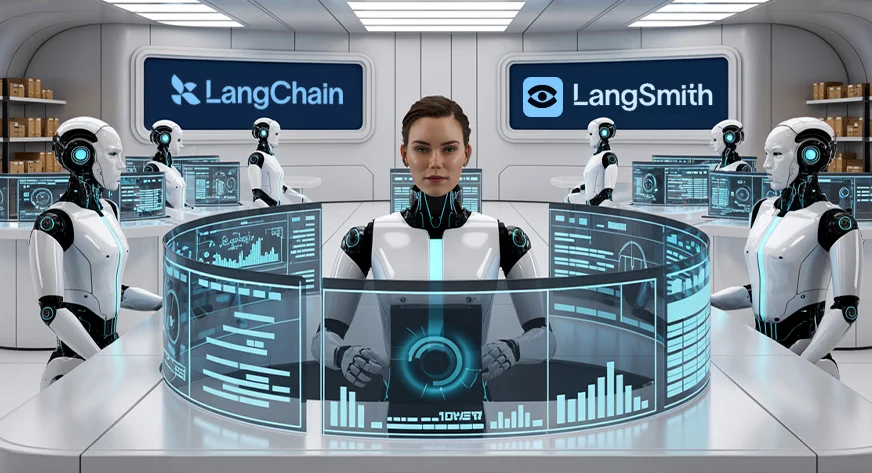
Introduction: Why Do Performance Gaps Exist in AI Systems?
As AI technology advances, particularly large language models (LLMs), they are demonstrating remarkable performance. However, like supercars and ordinary cars, LLMs are powerful but expensive. Conversely, cheaper models can sometimes fail in the same tasks. This performance gap poses a significant challenge when applying AI systems to real-world services. It’s similar to horses of varying speeds competing in a race, which can slow down the overall system.
Many teams are facing this issue. For example, let’s assume you’re building a customer service chatbot. Using an LLM can provide excellent answers, but the cost is exorbitant. Using a cheaper model reduces the cost but carries the risk of providing customers with inaccurate information. In such situations, a new concept called ‘Harness Engineering’ has emerged. It’s like using a sled to more easily transport heavy loads, instead of changing the model itself, you build a system around the model.
What is Harness Engineering? Design Systems, Not Just Models
Harness Engineering isn’t simply about using a model; it’s about building a system that maximizes the model’s strengths and compensates for its weaknesses. This is similar to creating complex structures using Lego blocks. Each block (model) performs a specific function, and they are assembled to complete the entire system. The core idea is as follows:
-
<li Model Abstraction: Hiding the model itself, allowing the system to interact with the model through an abstracted interface.
<li Composability: Easily swapping or adding different models. It’s like changing clothes, allowing you to change models as needed.
<li Flexibility: Defining and managing complex workflows. For example, multiple models can be connected to perform more complex tasks.
<li Observability: Monitoring and debugging system behavior. It’s like a car’s dashboard, allowing you to check the system’s status in real-time.
Harness Engineering is a core part of Harness Engineering. This enables the integration of various models, the definition of workflows, and the monitoring of system behavior. For example, LangChain can be used to distribute user queries to multiple models and combine the results to generate a final answer.
LangChain, DeepAgents, LangSmith: Powerful Allies in Harness Engineering
LangChain is a powerful framework for building Harness Engineering. This framework provides various components, such as models, prompts, memory, indexes, utilities, and agents. DeepAgents, through LangChain’s extensions, provides support for building more complex and intelligent agents. DeepAgents combines multiple LLMs to provide more accurate and creative answers to user questions. Finally, LangSmith plays a vital role in enhancing the observability of Harness Engineering systems. LangSmith provides the tools needed to track agent behavior, debug errors, and optimize performance.
LangChain simplifies Harness Engineering development. For example, LangChain’s ‘chains’ feature allows you to easily define complex workflows by connecting multiple models. DeepAgents extends LangChain’s functionality to support building more intelligent agents. Finally, LangSmith provides information needed to monitor and debug Harness Engineering system behavior.
Real-World Applications: What Problems Can Harness Engineering Solve?
Harness Engineering can be used in various fields. Here are a few examples:
-
<li Chatbots: Using an LLM to provide natural conversations and a cheaper model to answer common questions.
<li Virtual Assistants: Using DeepAgents to automate complex tasks and predict user needs.
<li Content Creation: Using an LLM to generate high-quality content and a cheaper model to draft.
<li Code Generation: Using an LLM to generate complex code and a cheaper model to generate simple code.
Harness Engineering helps improve the reliability, consistency, and scalability of systems in these diverse applications. It’s like coordinating various equipment and technicians efficiently on a construction site to build a building—integrating diverse models and tools to achieve the best results.
In-Depth Analysis: What Does the Future Hold for Harness Engineering?
Harness Engineering has the potential to revolutionize the way AI is developed. In the past, systems were designed around models, but now the era is opening where models are selected and integrated around systems. This is like the evolution of the automotive industry from designing cars around the engine to designing them around overall performance and user experience.
Harness Engineering will play a key role in increasing the reliability and consistency of AI systems. This will support businesses in utilizing AI technology more safely and efficiently, ultimately accelerating the popularization of AI technology. We will see new tools and technologies related to Harness Engineering emerge, and more complex and intelligent AI systems will be built in the future. This is an innovative technology that could completely transform the paradigm of AI development, much like the advent of the internet.
Detailed Analysis and Implications
-
<li Model Abstraction: Minimizing the impact of model changes by allowing the system to interact with the model through an abstracted interface, hiding the model itself.
<li Dynamic Agent Composition: Combining multiple LLMs and dynamically adjusting workflows using DeepAgents to handle complex tasks.
<li LangSmith Utilization: Improving system stability by tracking and debugging agent behavior using LangSmith.
<li Modular Design: Harness Engineering increases the independence and maintainability of each component by modularizing the system.
<li Cost Optimization: Optimizing the overall cost of the system by combining high-performance and low-cost models appropriately.
Original Source: Harness Engineering with LangChain DeepAgents and LangSmith