 English
  한국어
한국어
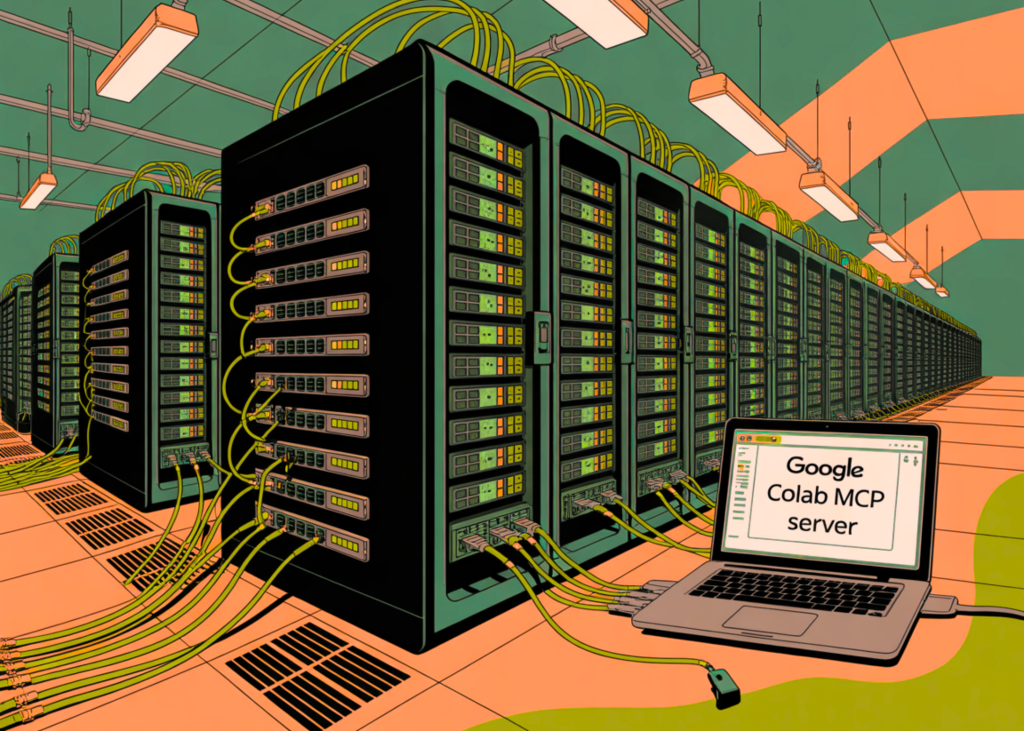
Google Colab Partners with AI Agents, Enabling GPU Utilization! MCP Server Released
Hello, IT professionals! Have you ever thought, ‘How great would it be to integrate this function with an AI agent?’ Google has finally heard your wish! With the release of the Colab MCP Server based on Model Context Protocol (MCP), AI agents can now directly access the Colab environment to automate code execution and efficiently utilize GPU resources. It’s amazing news! Let’s explore the new horizon of coding together.
Previously, AI models and development tools were separated, requiring developers to manually write code or copy and paste data. However, Google’s announcement is a significant turning point that will solve these problems and upgrade the AI development environment. It’s like magic – AI agents can now freely use Colab as if it were their own!
Model Context Protocol (MCP), the Core Technology of Colab MCP
Colab MCP‘s core lies in the Model Context Protocol (MCP) technology. MCP acts as a bridge connecting AI agents and Colab. In traditional AI development environments, models were separated from tools, making developers’ integration work difficult. MCP was created to solve this problem. With MCP, AI agents can access and control Colab as if it were their own tool. This automates complex coding tasks and improves development productivity.
How Can AI Agents Utilize Colab MCP?
Colab MCP server provides various functions for AI agents to interact with the Colab environment. For example, they can create new Colab environments from scratch or open and work with existing Colab notebook files. They can also execute Python code and install necessary libraries, completely controlling the Colab environment. It’s like a skilled coder manipulating their coding environment at will!
Notebook Orchestration: Creating and Managing Colab Environments
AI agents can utilize the Notebook Orchestration feature via Colab MCP to create new environments from scratch. It is important that they can structure the Colab environment by documenting it with markdown cells and composing logic with code cells. This allows AI agents to completely control and manage the Colab environment.
Real-time Code Execution: Real-time Python Code Execution
Colab MCP allows AI agents to execute Python code in real-time through the execute_code tool. Unlike traditional local terminals, this execution takes place within the Colab environment, allowing access to Google’s powerful backend computing resources and pre-configured deep learning libraries.
Dynamic Dependency Management: Dynamic Dependency Management
When an AI agent needs specific libraries (e.g., tensorflow-probability or plotly), Colab MCP automatically installs them using the pip install command. This allows AI agents to configure the Colab environment according to their working requirements.
Persistent State Management: Persistent State Management
Execution in the Colab MCP environment is persistent because it uses notebooks. AI agents can define variables in one step, examine their values in the next step, and use those values to determine subsequent logic.
Colab MCP, What Impact Will It Have on the Industry?
Colab MCP‘s emergence is expected to bring innovative changes to the AI development field. Particularly, integrating AI agents and Colab will lead to the creation of more automated and efficient development environments. Integrating various AI models and tools will provide even more powerful functions, which will significantly contribute to the advancement and expansion of AI technology. We expect various services and applications utilizing Colab MCP to appear in the future.
Moreover, Colab MCP can be a great help to both individual developers and AI development teams in companies. It will simplify and streamline complex and cumbersome development processes, improve development productivity, and support the faster and more efficient development of AI solutions. This is also expected to have a positive impact on companies’ competitiveness.
In Conclusion
Colab MCP is an important technology that opens up new possibilities for AI development. We expect more creative and innovative AI solutions to be born through Colab MCP. Use Colab MCP to open up a new horizon in AI development! Let’s keep an eye on Colab MCP and look forward to what amazing new features will be added in the future.
In-depth Analysis and Implications
Array